
Movement and Wellbeing: Why Practice Matters
How regular movement practice supports physical and mental wellbeing, and what we have learned from our community sessions.
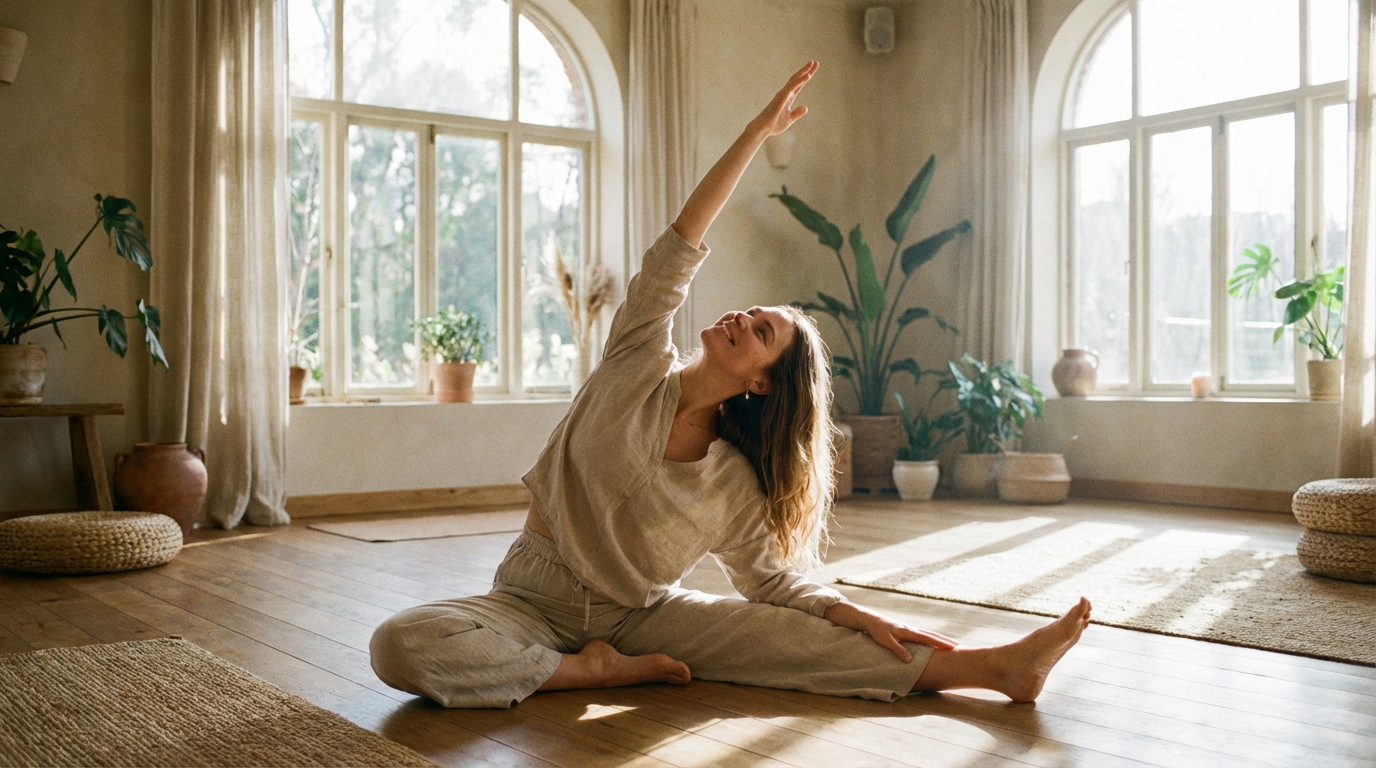
When we talk about movement and wellbeing, we are not only talking about exercise in the narrow sense. Movement practice—whether it takes the form of dance, somatic work, or structured improvisation—touches the body and the mind. At Keviltub, we have seen this repeatedly in our community sessions: people arrive with different backgrounds and goals, but over time many report similar shifts. They feel more at ease in their bodies. They notice patterns of tension and release. They describe a kind of mental reset that comes from spending an hour or two in focused, non-judgemental movement.
That reset is not accidental. Research in embodied cognition and somatic practices has long suggested that the way we move affects the way we think and feel. When we slow down, pay attention to sensation, and allow movement to arise from curiosity rather than obligation, we create conditions for recovery and reflection. That does not mean that every session is gentle or slow—our workshops range from high-energy to meditative—but it does mean that we value awareness as much as exertion.
What We Have Learned From Our Community
In our community workshops we deliberately mix people with different levels of experience. Beginners often say they were nervous before their first session; what helps is the clarity of the structure and the fact that there is no single “right” way to move. More experienced participants tell us they appreciate the chance to return to basics—to rediscover simplicity instead of always pushing for complexity. We take that feedback seriously. Wellbeing in this context is not about achieving a particular shape or skill; it is about sustaining a practice that feels sustainable.
We also hear that regularity matters. One-off workshops can open a door, but the people who report the strongest benefits are often those who come back—weekly, fortnightly, or monthly. That regularity creates a rhythm that many find grounding. It becomes part of how they look after themselves, in the same way that others might rely on a weekly swim or walk. We try to design our timetable so that such regularity is possible, with consistent slots and clear booking.
Taking It Beyond the Studio
One of the questions we get asked is whether what we do “counts” as exercise or therapy. Our answer is that it can sit alongside both without replacing them. Movement practice can support physical fitness—strength, flexibility, coordination—and it can support mental health by offering a space for expression and release. But we are not clinicians, and we do not prescribe movement as a treatment. We offer a space and a structure; the rest is up to the participant. For some, that space becomes a cornerstone of how they manage stress or recover from a difficult period. For others, it is simply something they enjoy and look forward to. Both are valid.
If you are curious about trying a session, we invite you to look at our workshop and community page or to get in touch. We can point you to a suitable starting point and answer any questions about what to expect.